
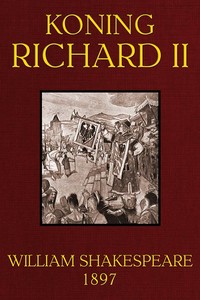
Koning Richard de Tweede by William Shakespeare
So, you're thinking about picking up a Shakespeare history play, and your mind might jump to Henry V's big speeches or the wars in the other parts. Richard II is different. It's quieter, more personal, and in my opinion, one of his most psychologically rich works.
The Story
The play opens with King Richard settling a dispute between two nobles, Henry Bolingbroke and Thomas Mowbray. It seems like routine royal business, but Richard's handling of it—exiling both men—shows his capricious nature. When Richard's uncle, John of Gaunt, dies, Richard seizes Gaunt's lands and wealth to fund a war in Ireland. This is the final straw. Bolingbroke returns from exile, rallying powerful lords who are fed up with Richard's mismanagement and favoritism. What follows isn't a war in the field, but a swift, quiet coup. Richard, returning from Ireland, finds his support has vanished. He is gradually cornered, forced to surrender his crown to Bolingbroke (who becomes Henry IV), and imprisoned. The play follows Richard's painful process of losing not just his throne, but his entire sense of self.
Why You Should Read It
For me, the magic here is all in Richard's character. At the start, he's insufferable—convinced he's untouchable because God put him on the throne. But as his power drains away, he becomes someone else entirely. In his captivity, he turns inward. He uses language to explore who he is without a crown, and his speeches become profoundly beautiful and sad. You watch a man who was a terrible king become a great poet of his own downfall. It's a stunning reversal. The play asks tough questions: Is power in the title, or in the person? What gives a ruler the right to rule? Shakespeare doesn't give easy answers, but watching Richard and Bolingbroke grapple with these questions is utterly compelling.
Final Verdict
This is the perfect Shakespeare play for anyone who loves deep character drama over battlefield action. It's for readers who are fascinated by politics, psychology, and the big questions about identity and legitimacy. If you've ever enjoyed a story about a dramatic fall from grace, or a character having a profound existential crisis, you'll find a lot to love here. It's less about the fate of England (though that's in the background) and more about the fate of a single, flawed soul. Give it a read—you might just find Richard, for all his faults, haunting your thoughts long after you finish.
Legal analysis indicates this work is in the public domain. Preserving history for future generations.
Melissa Young
4 months agoWow.
Elijah Johnson
1 year agoThis is one of those stories where the arguments are well-supported by credible references. I couldn't put it down.
Oliver Jackson
6 months agoHelped me clear up some confusion on the topic.
Karen Harris
1 year agoRecommended.


Michael Hill
10 months agoI started reading out of curiosity and the storytelling feels authentic and emotionally grounded. Worth every second.